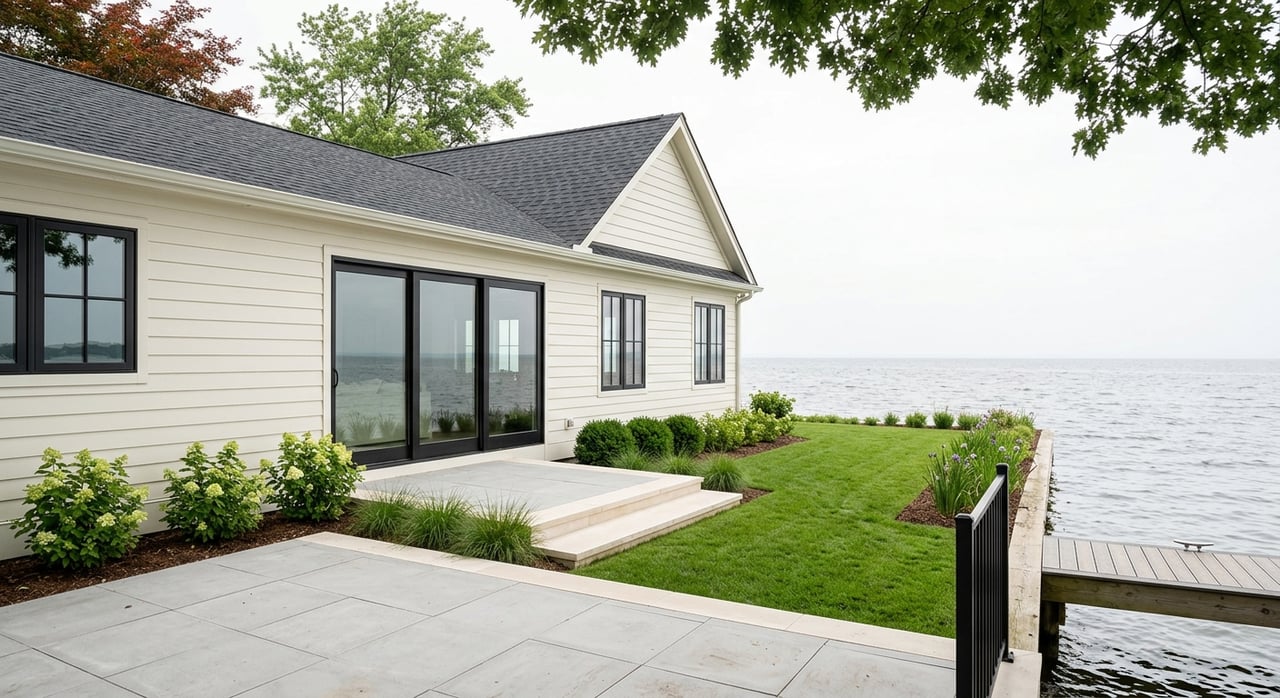
What To Know Before Buying On The Water In Cornelius
May 28, 2026
May 28, 2026
Buying on the water in Cornelius can feel like finding the best of both worlds: daily lake views and easy access to the rest of town. But on Lake Norman, the lot, shoreline, and boating setup can matter just as much as the house itself. If you are thinking about a waterfront purchase in Cornelius, this guide will help you focus on the details that shape enjoyment, cost, and resale value. Let’s dive in.
Cornelius sits on Lake Norman and has more than 70 miles of shoreline, according to the town’s master plan. The same plan notes that the peninsulas are already almost fully built out with residential homes and communities. That means your search will usually be about comparing existing waterfront properties, not waiting for new shoreline opportunities.
For you as a buyer, that changes the conversation. Instead of asking only whether you like the house, you also need to ask how the property functions on the water today. In Cornelius, the setting, dock situation, and shoreline history often drive value right alongside finishes and square footage.
Not every “waterfront” experience in Cornelius is the same. You may be comparing homes with very different levels of access and responsibility.
These properties typically offer private shoreline frontage and the most direct lake access. If a home already has a pier, dock, or other water-related structure, you will want to confirm that the structure was properly approved and documented.
Some properties are attractive because of what you may be able to add later. In these cases, the shoreline, permit history, and lot conditions can be as important as the home itself. A beautiful house does not always mean a simple path to a future dock.
Because much of the shoreline is already built out, some buyers end up looking at homes that rely on shared marina access or vessel storage arrangements rather than a private dock. For some lifestyles, that is a practical solution. It can also be the right fit if a lot cannot support a private structure on the water.
One of the biggest surprises for waterfront buyers is how regulated shoreline and dock work can be. In Cornelius, water-related structures include boat ramps, boathouses, docks, marine railways, piers, floats, and bulkheads. The town says these structures must be approved by Duke Energy Lake Management before construction.
Cornelius also states that residential piers and docks are only allowed on lots with a habitable single-family structure or a permit already issued for one. Duke Energy notes that applications for shoreline work commonly require items such as registered surveys, plan and profile drawings, local building permits, and in some cases a state permit for shoreline stabilization.
This is why permit history should be part of your due diligence from the start. If a property has an existing dock, lift, pier, or shoreline improvement, ask whether prior permits are available and whether any permit transfer is needed when ownership changes.
When you tour a waterfront home, it is easy to focus on the view, outdoor living areas, and interior updates. Those things matter, but the shoreline itself can affect how you use the property year-round.
A smart buyer will ask a few practical questions early:
In many Cornelius waterfront purchases, the biggest risk items are not inside the home. They are often tied to shoreline condition, permit history, water depth, vegetation, and boating access.
One of the most important lifestyle choices is whether you prefer a cove setting or a location closer to the main channel. Both can be appealing, but they offer different day-to-day experiences.
Lake Norman Marine Commission materials note that cove areas tend to have minimal development, shallow water, and varying vegetation. That often creates a quieter feel and can make the setting more sheltered. For some buyers, that sounds ideal for relaxing, floating, or enjoying a calmer visual backdrop.
The tradeoff is that cove properties may bring more questions about depth, vegetation, and docking conditions. A sheltered setting can be appealing, but it can also mean a shallower approach and more maintenance or usability questions depending on the season.
A main channel location may offer a different boating experience and a different kind of exposure. You may see more open water and easier access for longer outings, but you should still pay attention to no-wake zones, bridge areas, and traffic patterns on the lake.
Your best fit depends on how you plan to use the property. If you picture early morning paddleboarding and a tucked-away feel, a cove may appeal to you. If you want more direct boating access and broader water views, a main channel setting may deserve a closer look.
Lake Norman’s navigation guidance says water levels can vary by as much as 8 feet in normal operation and are generally drawn down during the fall and winter. That is a major point for buyers because a property that looks perfect on one showing day may feel very different in another season.
Winter drawdown can expose rocks, stumps, humps, and sandbars, and many danger spots are unmarked. If you are serious about a home, ask how the shoreline and approach look in late summer and during fall or winter drawdown. This can tell you much more than a single sunny-day showing ever will.
Aquatic vegetation is another real-world issue for Lake Norman buyers. A 2024 survey found both native beneficial plants and noxious species in the lake, with current management focused on hydrilla and lyngbya. The same report says eelgrass is native and beneficial, but dense beds can interfere with swimming and boating.
That does not mean vegetation is automatically a problem. It does mean you should understand how the area around a property functions for your lifestyle. If swimming, kayaking, or keeping a boat at the house is important to you, ask how vegetation tends to affect that part of the shoreline.
The boating experience is part of the value of waterfront ownership, so it helps to understand key Lake Norman rules before you buy. North Carolina’s Lake Norman no-wake law makes it unlawful to travel faster than no-wake speed within 50 yards of a launching area, bridge, dock, pier, marina, vessel storage structure, or vessel service area.
That rule can shape how quickly you can get in and out from certain locations. It can also affect how a buyer experiences a property near marinas, launch areas, or other active boating infrastructure. A home’s water access is not just about whether you can launch a boat, but also about what the immediate boating pattern feels like in everyday use.
State law also requires boating education for people born on or after January 1, 1988 who operate a motorized watercraft of 20 horsepower or greater on Lake Norman. If boating is a central part of your plan, it is worth making sure everyone in your household understands those requirements.
In Cornelius, lake access is only part of the value story. Town planning documents emphasize commercial centers, shopping opportunities, and better connections to Lake Norman, and NCDOT says current traffic volumes on Catawba Avenue exceed corridor capacity. The state also says the Catawba Avenue project is intended to improve connections between Cornelius and Huntersville and provide a better route to I-77, while the I-77 express lanes run to Exit 28 in Cornelius.
For you, that means a property’s location off the water may matter almost as much as its position on the water. A home with solid lake access and a convenient route to Catawba Avenue, I-77, and nearby retail may feel easier to live in full time. On the other hand, some buyers may prefer a setting with less road exposure even if it adds a few minutes to daily errands.
Before you move forward on a Cornelius waterfront home, it helps to slow down and verify the details that are easy to miss. A standard home inspection is important, but it is often not enough for this type of purchase.
Use this checklist as a starting point:
Before buying on the water in Cornelius, focus on more than the view. The biggest value drivers are often dockability, shoreline permit history, water depth and exposure, and the balance between lake privacy and road convenience.
Because Cornelius shoreline is largely built out, choosing well usually comes down to understanding the exact setting you are buying. When you look closely at how a property works on the water and on land, you can make a much more confident decision.
If you are planning a Cornelius waterfront move or relocating to Lake Norman from another market, Live In The Dream can help you evaluate the details that matter most and narrow your search with confidence.
Stay up to date on the latest real estate trends.

marketupdate
Monthly Newsletter

marketupdate
Monthly Newsletter

At Live In The Dream, we believe that finding or selling your home should be a seamless and enjoyable experience. Our dedicated team of real estate professionals is committed to providing you with the highest level of service, personalized to meet your unique needs.
Kathy Caputo Worek
Megan Worek
Virginia & DC Office
9990 FAIRFAX BLVD SUITE 160
FAIRFAX VA 22030
North Carolina Office
464 WILLIAMSON RD SUITE A
MOORESVILLE NC 28117