Georgetown Historic Home Updates: How to Plan Well
July 2, 2026
July 2, 2026
Thinking about updating a historic home in Georgetown? You are not just choosing finishes and floor plans. In Georgetown, even modest exterior changes can trigger a preservation review process, so your project needs a smart plan from the start. If you understand what matters most before you begin, you can protect the home’s character, avoid common missteps, and move forward with more confidence. Let’s dive in.
Georgetown is one of Washington’s most closely watched historic areas. It became a historic district in 1950, was listed on the National Register of Historic Places and designated a National Historic Landmark in 1967, and had its period of significance expanded in 2003.
That history affects how updates are reviewed today. Georgetown predates DC’s modern historic preservation law, so most exterior work does not follow the standard citywide review path. Instead, many projects go through a separate Georgetown review system.
The Old Georgetown Act of 1950 gave the U.S. Commission of Fine Arts authority to review most exterior construction in Georgetown. The Old Georgetown Board serves as the advisory panel in that process.
For many homeowners, the practical issue is visibility. If your proposed work is visible from a public street or alley, it typically goes through the Georgetown system first. Exterior work that is not visible from public space is generally handled by the Historic Preservation Office and Historic Preservation Review Board.
In Georgetown, visibility from public space shapes the review lens. That means the parts of your home most likely to receive close attention are the ones people can see from the street or alley.
Projects often face more scrutiny when they affect:
If your update touches any of these elements, it helps to think of the project as both a design project and an approvals project.
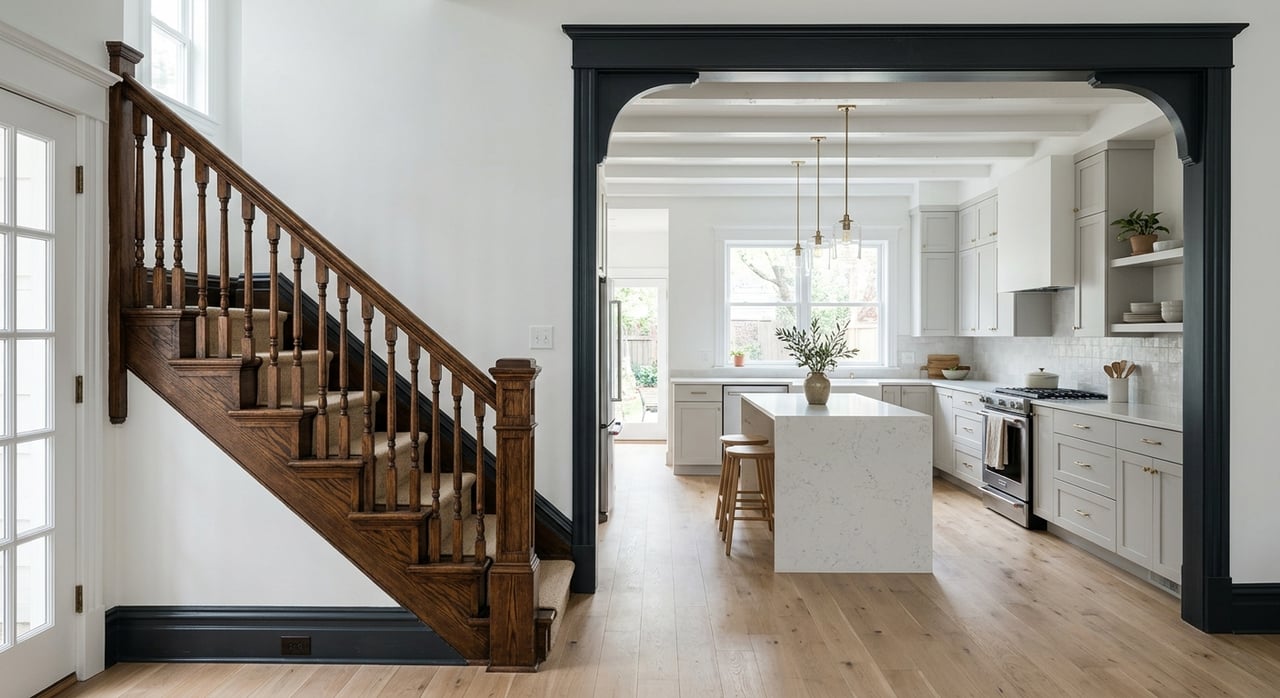
Many Georgetown homes function like traditional rowhouses. They are often attached, sit on narrow lots, and historically were arranged with front public rooms, a rear kitchen zone, an open stair, a side access hall, and bedrooms upstairs.
Those relationships can matter just as much as decorative details. In other words, the historic character of the home may include the way the spaces connect, not only how the exterior looks.
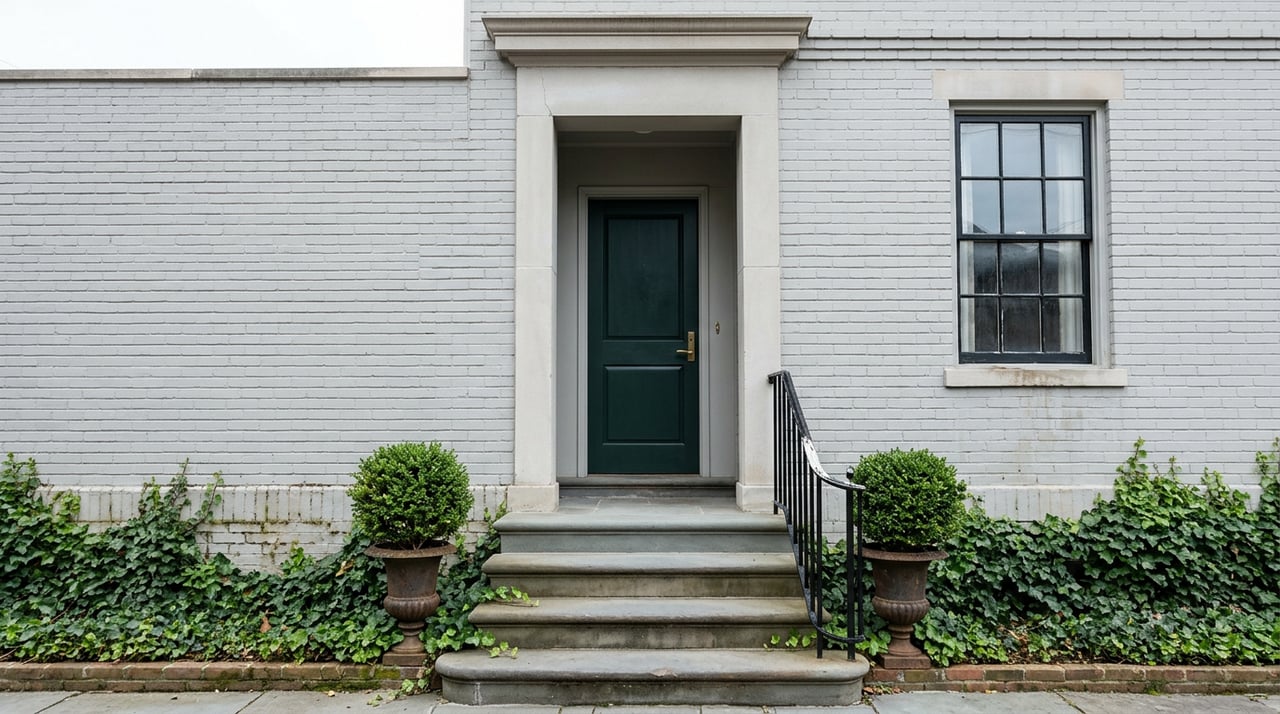
Exterior character-defining features commonly include:
Windows are especially important in historic homes. They help define the rhythm and appearance of the building, and in many cases they can still be repaired rather than replaced.
If your goal is comfort, efficiency, and easier daily living, the best first step may not be a major renovation. National Park Service guidance recommends beginning with an energy audit and then focusing on lower-impact improvements that can improve performance without changing historic character as much.
A practical starting list includes:
These types of updates can often improve comfort while preserving the visible historic shell of the home. In Georgetown, that balance matters.
Old windows are often one of the first things owners want to change, but they deserve a closer look. Preservation guidance says historic windows should usually be repaired before replaced.
That can include weatherstripping, glazing repair, and adding storm windows. In some cases, a storm window over a historic window can perform similarly to a new low-E vinyl replacement window.
There is also a practical cost angle. Replacement windows generally do not pay for themselves quickly through energy savings alone, so repair may offer a better balance of preservation, comfort, and value.
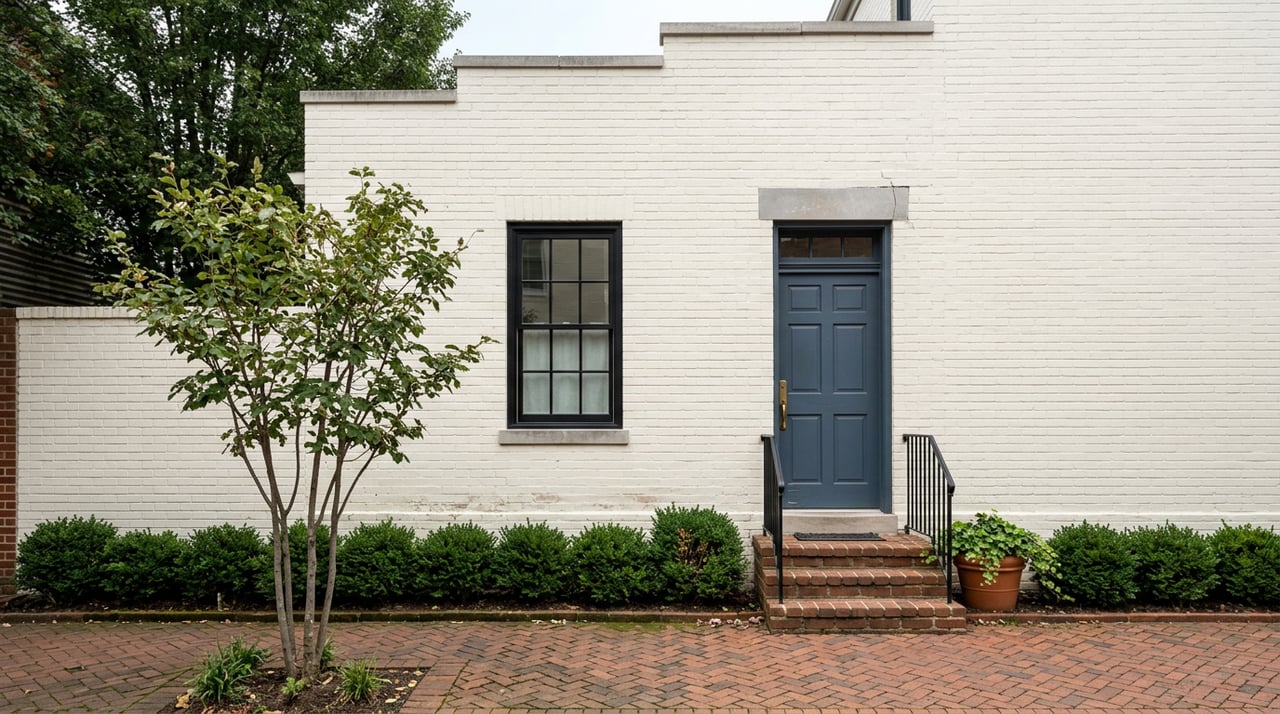
Brick and stone are a big part of Georgetown’s visual identity. Because masonry is so prominent on many homes, maintenance choices can have a major effect on both appearance and long-term condition.
If mortar joints are deteriorated, repointing should match the original in strength, composition, color, texture, and joint profile. Guidance also warns against abrasive cleaning methods such as sandblasting and high-pressure water, which can permanently damage historic masonry.
For homeowners, that means the right contractor matters. A quick cosmetic fix can create lasting problems if the materials or methods are not appropriate for a historic property.
Sometimes you simply need more space. If that is the case, preservation guidance recommends first looking at whether secondary areas of the existing home can be used more effectively before turning to an addition.
If an addition is still needed, the preferred approach is usually to place it at the rear or another inconspicuous location. It should remain smaller and subordinate to the historic house, and it should be compatible without copying the original so closely that the old and new become hard to distinguish.
For Georgetown rowhouses, interior planning matters too. Major changes to the entry, stair hall, and main public rooms are best approached carefully because those areas often contribute strongly to the home’s historic character.
One of the clearest ways to plan a Georgetown update is to divide the work into three buckets. This approach lines up well with Georgetown’s review framework and preservation guidance.
Focus first on protecting what is seen from public space. That usually means the front façade, visible side walls, roof profile, masonry, windows, and other defining exterior features.
Next, target systems and improvements that make the home work better day to day. Mechanical updates, air sealing, insulation in low-impact locations, and other less visible improvements can often deliver meaningful benefits.
Any addition, façade change, new opening, or roof alteration should be treated as a formal design and approvals exercise from the start. This mindset helps you budget more realistically for time, design work, and revisions.
Before you get too far into sketches or contractor conversations, confirm that the property is within the Georgetown Historic District. Then review the DC Office of Planning’s Georgetown guidance and current process.
Applications for Georgetown work are filed through the Historic Preservation Office, which coordinates transmittal to the Commission of Fine Arts for Old Georgetown Board review. A separate HPRB application is generally not required for Georgetown work.
This is an important planning detail for buyers and owners alike. If you are comparing homes or deciding how much work a property may need, understanding the approvals path can shape your timeline and budget.
The Old Georgetown Board is a three-architect advisory board to the Commission of Fine Arts. It meets at the National Building Museum on the first Thursday of each month except August.
Projects may be presented publicly or handled on a consent calendar, and review is not complete until the Commission of Fine Arts approves the Old Georgetown Appendix. Even well-prepared projects can involve multiple review steps before permits move ahead.
That does not mean your project is impossible. It simply means Georgetown updates usually reward patience, preparation, and a realistic schedule.
For major construction, local input can matter. Georgetown’s Advisory Neighborhood Commission 2E and nearby residents often participate actively in the review process.
DC’s Historic Preservation Office encourages applicants planning major construction to contact ANC 2E and nearby neighbors early. It also advises contacting Commission of Fine Arts staff before filing if the project is a new building or a large addition.
For homeowners, early outreach can help surface concerns before formal review begins. That can lead to a smoother process and fewer surprises later.
If you are buying a Georgetown historic home, planning potential updates is part of due diligence. A house that looks like it needs a simple exterior change may require more time and coordination than you expect.
If you are selling, it helps to understand which completed updates are likely to resonate with buyers. Thoughtful system improvements, careful window or masonry maintenance, and preservation-minded work can support buyer confidence.
In either case, Georgetown homes deserve a strategy that respects both livability and historic character. When you plan with those two goals together, you are more likely to make decisions that hold up over time.
If you are considering a Georgetown purchase, preparing a future renovation plan, or getting ready to sell a historic property, Live In The Dream can help you think through the home, the process, and your next move with clear local guidance.
Stay up to date on the latest real estate trends.

marketupdate
Monthly Newsletter
At Live In The Dream, we believe that finding or selling your home should be a seamless and enjoyable experience. Our dedicated team of real estate professionals is committed to providing you with the highest level of service, personalized to meet your unique needs.
Kathy Caputo Worek
Megan Worek
Virginia & DC Office
9990 FAIRFAX BLVD SUITE 160
FAIRFAX VA 22030
North Carolina Office
464 WILLIAMSON RD SUITE A
MOORESVILLE NC 28117