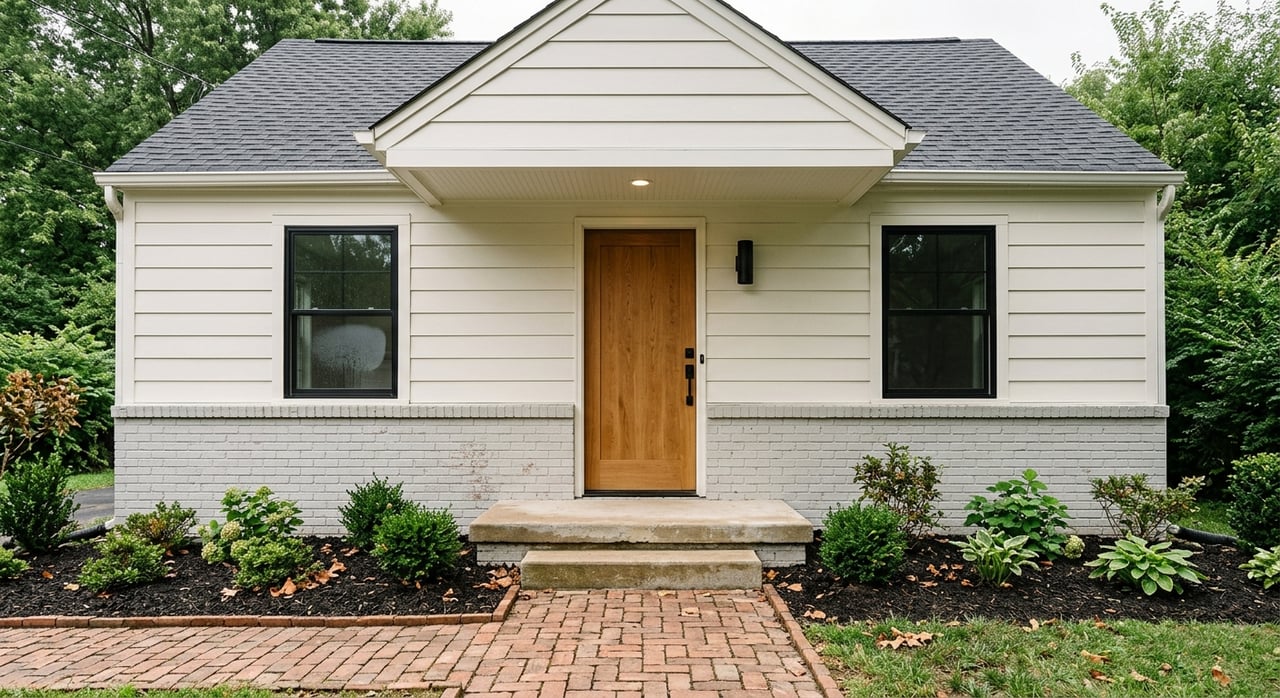
Is Downsizing To Falls Church The Right Move For You
May 14, 2026
May 14, 2026
Wondering if downsizing to Falls Church will actually simplify your life, or just change your address? If you are ready for less upkeep, easier access to shops and transit, and a home that fits this next chapter better, Falls Church often makes the shortlist for good reason. The key is knowing whether the lifestyle benefits outweigh the costs for your situation. Let’s dive in.
Falls Church is a small independent city of about 2.05 square miles with a population of 15,034, according to the latest Census Bureau QuickFacts data. City materials describe it as a compact, walkable place where many shops, restaurants, and attractions sit within a 5- to 10-minute walk of each other. For many homeowners, that setup can feel like a meaningful shift away from the maintenance demands of a larger suburban property.
Another reason Falls Church comes up often in downsizing conversations is location. The city is inside the Beltway, has access to the East and West Falls Church Metro stations, and connects to the W&OD Regional Trail. If you want to stay close to Northern Virginia and Washington while simplifying your day-to-day living, that combination can be very appealing.
The city’s population data also supports the downsizing conversation. Falls Church’s FY2026 budget materials show that 16.8% of residents are age 65 or older. That does not make it a one-size-fits-all destination, but it does suggest steady interest in homes that are easier to manage.
If you picture downsizing as moving from a large detached house into a sleek condo or a lower-maintenance townhome, Falls Church offers options in that direction. The city’s 2025 Affordable Living Policy says local land-use policy includes single-family detached homes, townhouses, condominiums, and multifamily rental housing. In other words, you are not limited to one type of smaller home.
The same city policy says the current housing landscape is made up primarily of detached homes at 36% and large-scale multifamily housing at 41%. Townhomes make up 11%, small-scale multifamily buildings 11%, and medium-scale multifamily 2%. For downsizers, that mix matters because it shows there is already a meaningful share of condo-style and multifamily living in the city.
City policy also points toward more compact housing over time. Falls Church notes recent zoning changes that expand accessory dwelling units and create standards for smaller attached and detached homes. That signals a local push toward housing types that may better fit buyers who want less space and less exterior work.
A condo can make sense if your top priorities are reducing maintenance and simplifying daily living. In Falls Church, condos may be one of the clearest paths to a smaller footprint in a close-in location. They can also appeal if elevator access or single-level living is important to you.
There is also a pricing detail worth noting. In the 2026 assessment cycle, residential condominiums rose 3.2%, while single-family homes rose 8.1% and townhomes rose 7.0%. That does not predict future value or determine what any one home is worth, but it does suggest condos have recently appreciated more slowly than detached and attached homes.
A townhome can be a strong middle-ground option if you want less exterior upkeep than a detached home but still prefer more separation than a condo may offer. In Falls Church, this can be an attractive compromise for buyers who are not ready to give up all private outdoor space or who still want multiple levels.
The city’s FY2026 budget materials also indicate that two townhouse projects on Park Avenue are under construction or expected soon. That is another sign that smaller attached housing remains part of the city’s evolving inventory. If you want a newer, more manageable home without moving too far from a traditional house feel, a townhome may be worth a close look.
Some downsizers still want a yard, but not the size or workload that comes with a larger suburban lot. In Falls Church, smaller detached homes can fill that gap. You may still have outdoor upkeep, but on a more manageable scale.
This option often works best if your goal is not to eliminate maintenance entirely, but to reduce it while keeping more independence and privacy. It can also be a good fit if you want to stay in a detached-home setting while cutting down square footage.
Falls Church appears to be adding more of the housing types downsizers often want. The FY2026 budget says Broad and Washington, West Falls, and Modera are open. It also notes that two major senior buildings are under construction or expected soon.
That matters because one of the city’s own policy documents says the current housing stock does not fully meet the needs of the aging population. More compact and easier-to-manage housing can help fill that gap. For you, that means more choices may be available than in the past, especially if you are open to condos, multifamily living, or newer attached homes.
Lifestyle is only half the equation. Downsizing in Falls Church may reduce your maintenance burden, but it does not automatically mean a lower monthly cost. This is one of the most important points to understand before you make a move.
Census QuickFacts lists the median value of owner-occupied housing units in Falls Church at $1,055,600. The city’s FY2026 budget lists a January 1, 2025 median single-family home value of $1,149,200 for assessments of single-family homes and townhouses. Those figures show that Falls Church remains a high-value market, even when you move into a smaller home.
The city’s current real estate tax rate for FY2026 is $1.185 per $100 of assessed value. Using that rate, a home valued at the Census median of $1,055,600 would imply about $12,509 per year in real estate taxes, or roughly $1,042 per month. Using the city’s median single-family and townhome value of $1,149,200 would imply about $13,618 per year, or about $1,135 per month.
These are rough illustrations, not quotes for a specific property. They are still useful because they show the cost level you may be working with. Falls Church also bills real estate taxes in two installments due December 5 and June 5, and the city says assessments are set at 100% of fair market value.
If you are comparing a condo, townhome, and smaller detached home, the purchase price is only one part of the story. Condo fees or HOA dues can significantly change your monthly budget. In many cases, these dues are paid separately from your mortgage payment.
That means a smaller home can still carry a meaningful monthly cost once you add taxes, insurance, dues, and maintenance. For some buyers, that tradeoff is still worth it because it buys convenience, less upkeep, and a better location. For others, it can make downsizing less financially dramatic than expected.
If you have owned your current home for many years, your sale proceeds may play a major role in whether downsizing makes sense. A longtime owner may have substantial equity, which can help offset a high purchase price in Falls Church. That can be especially helpful if your goal is to lower stress, not necessarily to slash monthly costs.
Tax treatment matters too. IRS Publication 523 says many homeowners who sell a main home may exclude up to $250,000 of gain, or up to $500,000 for some married couples filing jointly, if they meet the ownership and use tests. The IRS also says losses on the sale of a personal-use home are generally not deductible.
Falls Church offers real estate tax relief and deferral programs for income-eligible seniors and disabled residents. The city says deferred taxes are collected when the property is sold or when ownership changes. While that will not apply to everyone, it is one more local factor worth understanding if you are weighing the timing of a move.
Programs like this do not eliminate the need for a careful budget. They do, however, show why local details matter when you are evaluating your full housing costs in Falls Church. Looking at the city’s rules and numbers can give you a clearer picture than broad national assumptions.
Falls Church is often a strong fit if your main goal is a smaller, lower-maintenance home in a compact location with transit access and walkable commercial areas. If you value convenience, shorter distances, and less exterior work, the city checks many important boxes. In that case, downsizing can be about improving daily life more than cutting housing costs.
It may also make sense if you want to stay close to Northern Virginia and Washington without maintaining a larger property. For many homeowners, that close-in convenience is the main reason to pay a premium for a smaller home here. The question becomes less about square footage and more about how you want to live.
Falls Church may be less compelling if your top goal is a much lower monthly payment. Home values are high, property taxes are meaningful, and condo or HOA dues can add up quickly. You may still spend a substantial amount each month, even after moving into a smaller space.
It may also be a tougher fit if you want a downsized home with very low carrying costs and plenty of extra space. In Falls Church, the value proposition often centers on location, access, and convenience. If those are not your priorities, the premium may not feel worthwhile.
Before you decide, it helps to compare your options with a clear framework. Falls Church can work very well for the right buyer, but the decision should be based on both budget and lifestyle.
Use this checklist as a starting point:
Downsizing to Falls Church can be the right move if you want a simpler home life without giving up a prime Northern Virginia location. The city offers the compact feel, housing variety, and daily convenience many downsizers want. But it is usually more of a lifestyle play than a bargain play.
If you are trying to decide whether Falls Church is the right fit, the smartest next step is to compare your likely sale proceeds, target monthly costs, and preferred home type before you start touring. The right move is the one that supports how you want to live now, not just the one that looks smaller on paper.
If you want help weighing your options in Falls Church or planning a move in Northern Virginia, Live In The Dream can help you think through the numbers, timing, and best-fit property type with a personalized approach.
Stay up to date on the latest real estate trends.

marketupdate
Monthly Newsletter

marketupdate
Monthly Newsletter
At Live In The Dream, we believe that finding or selling your home should be a seamless and enjoyable experience. Our dedicated team of real estate professionals is committed to providing you with the highest level of service, personalized to meet your unique needs.
Kathy Caputo Worek
Megan Worek
Virginia & DC Office
9990 FAIRFAX BLVD SUITE 160
FAIRFAX VA 22030
North Carolina Office
464 WILLIAMSON RD SUITE A
MOORESVILLE NC 28117